
What Are Dumpling Squishies Made Of? Materials, Safety and Slow Rise Explained
DumpliPop · August 30, 2026 · 3 min read
A dumpling squishy is made of slow-rise TPR foam, with PP and PU in the mix, and it is that foam alone that decides whether the toy is any good. Everything else — the face, the glitter, the bamboo steamer it sits in — is finish. The foam is the product.
What TPR actually is
TPR stands for thermoplastic rubber. It is a soft, flexible material that behaves like rubber but can be moulded like plastic, which is what lets a squishy hold a detailed dumpling shape and still squash flat under a thumb. It is the same family of material used in a lot of children's toys, and it is non-toxic.
The reason it matters here is the rate at which it returns. A cheap squeeze toy is usually solid foam or low-grade sponge: press it and it snaps back instantly. Slow-rise TPR is formulated so the air moves back through the material gradually, which is why a good one takes a few seconds to puff out again.
Why the slow rise is the quality test
If you only check one thing, check the rise. Squeeze the squishy flat and let go:
- Instant snap back — not slow-rise foam. It will feel hollow and it will not be satisfying twice.
- A few seconds to recover the full shape — this is what you are paying for.
- Never quite recovers, or stays creased — the foam is failing, usually from heat or age.
The larger the squishy, the more foam there is to move, and the longer the rise takes. That is why the giants feel slower than the minis even though the material is identical.
Are they safe?
Every squishy in our range is rated for ages 3 and up, and the material is non-toxic. Two things are worth saying plainly rather than burying:
- They are not edible. They look like food on purpose, which is exactly why a very young child needs supervising around one.
- Under 3, they are not suitable at all — a mini at 3 to 6 cm is small enough to be a choking hazard.
If a squishy ever splits, stop using it. The foam is not meant to be pulled apart, and a torn piece is a different hazard from an intact toy.
Why some yellow and crack
Slow-rise foam ages badly in two conditions: direct sunlight and heat. UV breaks down the material and turns pale colors yellow; heat makes it lose its rise and eventually crack. A squishy left on a sunny windowsill will visibly degrade in months, while the same one kept on a shelf holds up for years.
Cleaning is simple and should stay simple: a damp cloth, nothing more. No washing machine, no dishwasher, no solvents. Water gets trapped inside the foam and does not come out, which is the fastest way to ruin one.
What comes in the box
One squishy and its own reusable miniature bamboo steamer, in a printed box. The steamer is real bamboo rather than moulded plastic, which is why it works as display and not just packaging. Multi-packs and mystery boxes list their contents on the product page, piece by piece.
Shop what this guide covers
Keep reading
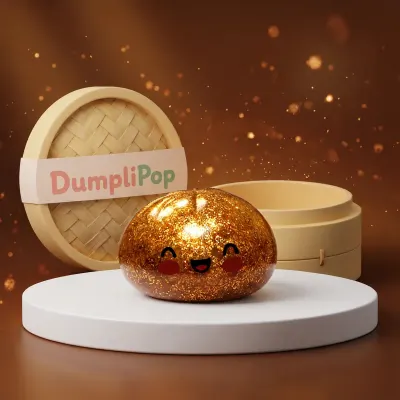
Real vs Fake Dumpling Squishy: The Five-Second Squeeze Test
There is one test, it takes five seconds, and it does not require you to have ever held a real one. Squeeze the squishy completely flat, let go, and count. A…
Aug 30, 2026 · 3 min read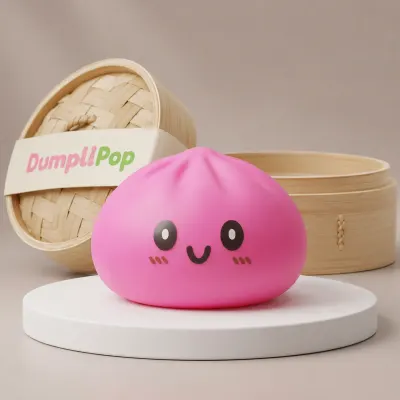
How Big Is a Dumpling Squishy? Mini, Regular and Giant Sizes Compared
Dumpling squishies run from 3 cm to 25 cm. That is the honest short answer, and it is a wider spread than most photos suggest — a mini and a giant are the…
Aug 30, 2026 · 3 min read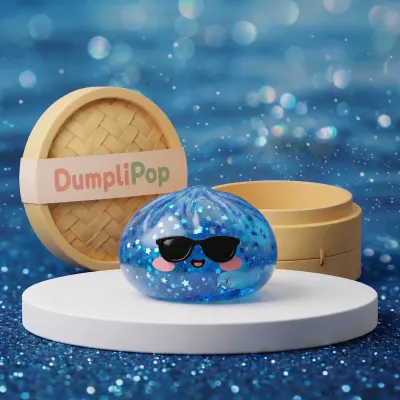
What Is a Dumpling Squishy? Sizes, Foam and What You Actually Get
A dumpling squishy is a slow-rise foam toy moulded in the shape of a bao. You squeeze it flat, let go, and it takes a few seconds to puff back out. That…
Aug 30, 2026 · 4 min read